Brand comparison
Cassina vs Flexform
Two Meda houses, two temperaments. Cassina is design history made buyable — the official reissues of the masters plus contemporary statement pieces. Flexform is the quiet end of luxury — Citterio-led upholstery built for comfort that lasts decades.
Cassina
Founded in Meda in 1927 by Cesare and Umberto Cassina. A pillar of Italian design culture, Cassina holds the official rights to reissue 20th-century masters — Le Corbusier, Charlotte Perriand, Gerrit Rietveld — through its I Maestri collection, while commissioning contemporary work under art director Patricia Urquiola. The brand’s identity is authorship: pieces with a documented designer and a place in design history.
Flexform
Founded in Meda in 1959 by the Galimberti family. Under the long-standing art direction of Antonio Citterio, Flexform built a reputation for upholstery that is understated, beautifully made and exceptionally comfortable — “quiet luxury” before the phrase existed. Its pieces are designed to recede into a well-resolved interior rather than dominate it.
Cassina: authorship & heritage
Cassina treats furniture as design history. Owning a Cassina LC4 or Cab means owning the authorized, archivally faithful version of a canonical object. The catalog spans muted classics and bolder contemporary color and form — the common thread is that every piece is authored and documented.
Flexform: comfort & restraint
Flexform optimizes for how a room feels to live in. Deep seats, soft volumes, hand-finished upholstery and a restrained palette produce interiors that read as calm and considered. The design statement is the absence of a loud statement — confidence expressed through quality, not spectacle.
Cassina
LC Collection (I Maestri)
Cassina holds the official rights to reissue Le Corbusier, Pierre Jeanneret and Charlotte Perriand — the LC2, LC3 and LC4 chaise among them. Authored, archival, and a reference point for 20th-century design.
Cab
Mario Bellini’s 1977 leather-saddle chair, stitched over a steel frame. A modern classic still in continuous production — disciplined, architectural, instantly recognizable.
Soriana / Utrecht
Reissued and contemporary pieces (Scarpa’s Soriana, Rietveld’s Utrecht) that show Cassina’s range from historical authority to bold color and form.
Flexform
Groundpiece
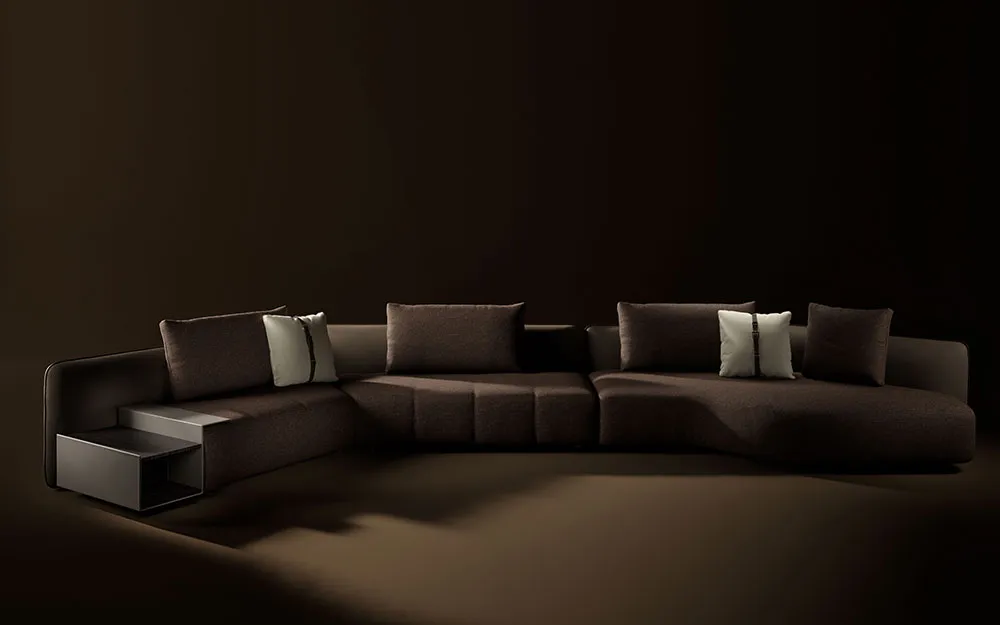
Antonio Citterio’s 2001 sofa with its signature low, deep seat and integrated side shelf — the piece that defined Flexform’s “discreet luxury” and remains its emblem.
Grandemare
A generously proportioned, enveloping seating system — soft volumes, removable covers, built for long comfort rather than visual drama.
Long Island
Tables and complements with fine metalwork and warm timber, designed to sit quietly alongside the upholstery rather than compete with it.
Choose Cassina if…
You want pieces with provenance — design objects that carry a name and a history, and that can anchor a room as much through meaning as through form. Cassina suits collectors, design-literate clients and projects where one or two authored statements set the tone.
Choose Flexform if…
You want a home that feels effortless and supremely comfortable, where the furniture supports the architecture rather than competing with it. Flexform suits clients who value the way a sofa lives over the conversation it starts — quiet quality, every day.
Sometimes neither Cassina nor Flexform is the right call
Cassina and Flexform bracket the design-icon and quiet-comfort ends of Meda upholstery. If the brief wants architectural, multi-designer statement seating, Minotti or Baxter fits the room better than either. For a warmer, more decorative Italian register that sits between the two, look at Meridiani. And for outdoor or contract-grade durability, neither house is the right tool. We match the maker to the room, not the room to a name we already carry.
“Cassina you notice first; Flexform you appreciate longer. The best interiors often use both.”
Chiara Borgoli, Via della Seta
Frequently asked questions
What is the difference between Cassina and Flexform?
Cassina is a design authority: founded in Meda in 1927, it holds the official rights to reissue masters like Le Corbusier and Rietveld through its I Maestri collection, alongside contemporary design. Flexform, founded in Meda in 1959, is led by Antonio Citterio and is known for understated, supremely comfortable upholstery — “quiet luxury.” Cassina is the more intellectual, statement-driven choice; Flexform the more discreet, comfort-led one.
Are Cassina and Flexform made in the same place?
Both are rooted in Meda, in the Brianza furniture district north of Milan — the historic heart of Italian furniture making. They are neighbors in geography and quality tier, but distinct in temperament.
Which is more expensive, Cassina or Flexform?
Both sit firmly in the upper tier. Cassina’s authored reissues and design-icon pieces command premium pricing for their provenance; Flexform’s hand-built upholstery commands it for craft and comfort. Within a project, the two are broadly comparable — the deciding factor is usually fit, not price. Exact figures depend on configuration, finish and material and are quoted per project.
Can I combine Cassina and Flexform in one interior?
Yes, and many projects do. A common approach pairs a Flexform sofa — for the comfort it is known for — with a Cassina design icon as a sculptural counterpoint (an LC4 chaise, a Cab chair). Because Flexform runs quiet and Cassina can run bolder, the two balance well when material samples are reviewed together.
Deciding between the two?
We buy from both every season. Tell us about the room and we will steer you to the right fit — with samples reviewed side by side.